What to Wear to Your Boudoir Session
You probably already have what you need.
Wardrobe is the thing clients stress about most before a session. Which is understandable. But it’s also something I help with, so you don’t have to figure it out alone.
Here’s the philosophy that drives every wardrobe conversation I have: dress up before we dress down.
A boudoir session moves somewhere. We start dressed. We work toward undressed. That progression, done right, is where the session finds its best images and where most women find the version of themselves they didn’t know they were coming in to find. What you bring should cover the whole range, because we’ll likely use more of it than you think.
The dressed look
Start here, not with lingerie. Bring something you’d actually wear somewhere. A dress you’ve been holding onto for the right occasion. This is that occasion.
What photographs best at this level: textures. Lace, ruching, sequins, chiffon, velvet. Fabrics with visual interest do something in a photograph that solid cotton doesn’t. Bring a variety of necklines too. Strapless, off-shoulder, wrap, plunge, high neck. Different necklines produce completely different images and give the session range without requiring ten outfits.
Go form-fitting at this stage. Looser silhouettes can read as shapeless in a frame. A fitted dress that follows your body is almost always the better choice. If you’re self-conscious about your arms, skip cap sleeves. They’re rarely flattering on camera. Sleeveless works beautifully on toned arms, and three-quarter sleeves are universally flattering and slimming.
One thing to avoid throughout: busy patterns. Stripes, florals, geometric prints all pull the viewer’s eye away from your face. Err toward solids and subtle textures. If you love a patterned piece, bring it and we’ll see how it reads on camera, but it’s not where I’d start.
Don’t forget accessories at this stage. Statement jewelry changes a look entirely. Long strands of pearls, bold earrings, stacked bracelets. Bring what you have. The camera loves them, and they can take a simple look and make it feel like a fashion editorial.
The sexy casual middle
This is often the most personal phase of the session, and the one most women don’t think to bring.
Your favorite jeans. Not your errands jeans. Your good jeans. The ones you feel great in. Think dressy, sexy denim. Fitted through the leg. Pair it with something simple on top: an off-shoulder sweater, a fitted tank, an open button-down over nothing. This look tends to produce images that feel the most like you, which is part of why they’re often the ones women end up choosing.
Bodysuits work well here too. They read as dressed but fitted, and they transition naturally into the more intimate looks.
The intimate look
This is the part people think the whole session is. It’s actually just one layer of it.
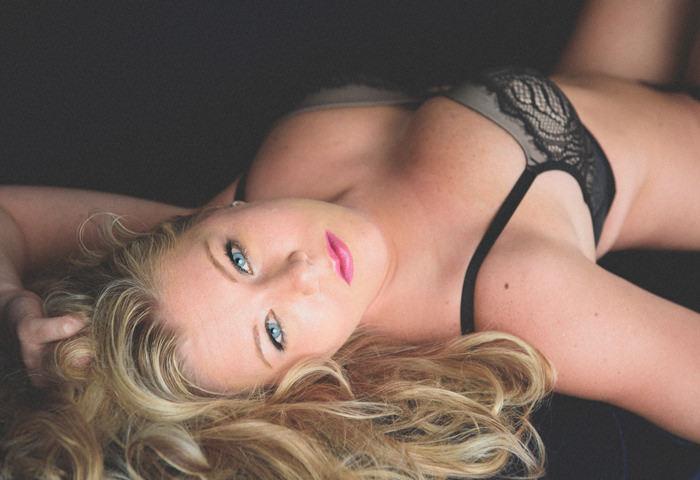
Bring lingerie in a range of styles: a classic set, something with lace or texture, a silk robe, a bodysuit that pushes toward intimate. Bring something light (white, cream, blush) and something dark (black, deep burgundy, forest green). Light and dark photograph differently depending on where the light is and what’s working in the room, and having both gives us options.
Don’t overthink the fit. Lingerie that fits well and feels comfortable will photograph better than something technically “right” that you’re constantly adjusting. If something doesn’t feel like you, leave it at the store.
One practical note: avoid anything with tight elastic or bands that leaves marks on the skin. Those impressions take 30 to 45 minutes to fade and can show up in photos taken right after you remove the garment.
If lingerie shopping feels like an obstacle between you and booking, don’t let it be. The studio has wraps, robes, and cover pieces. We can talk through options at the pre-session consultation and figure out what you actually need to bring.
If your session is fitness-focused
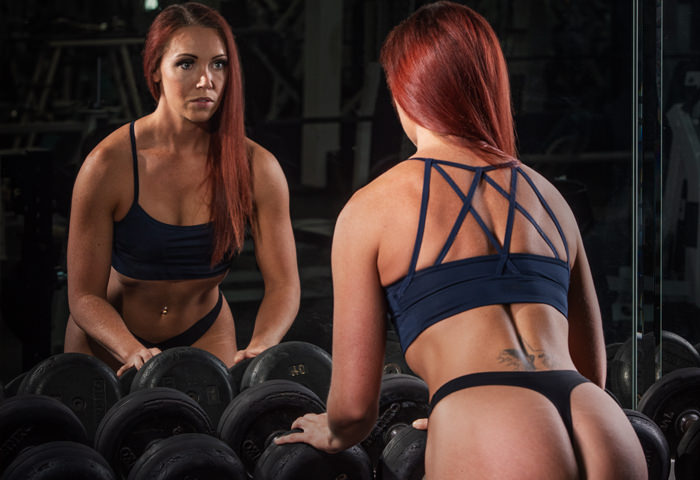
Athletic and fitness sessions follow the same dress-up-to-dress-down principle, just with a different wardrobe vocabulary. Start in what you’d wear to train: a matching set, a sports bra with high-waisted leggings, whatever you feel strongest in. The gym is your environment. Bring what belongs there. From there, the session moves at whatever pace feels right.
Shoes and accessories
Heels photograph beautifully and elongate the leg, but they’re not required. If you have a pair you love and feel confident in, bring them. Barefoot works too. Statement jewelry is one of the most underrated things you can add: long pearls, bold earrings, stacked bracelets. Something with meaning in the frame makes an image feel more yours.
Colors
Bring variety: something light, something dark, a pop of something unexpected. A deep jewel tone or a warm cognac often produces the image that surprises everyone. Mixing colors across your looks gives the session more range without more effort.
A few things worth knowing before you shop
These come up constantly in consultations, and they’re the kind of thing you wouldn’t think to look up on your own.
Push-up bras often look unnatural on camera. The exaggerated lift reads differently in a photo than it does in the mirror. A demi-cup or underwire bra with real support tends to photograph much better. Good fit does more than padding.
If you’re thinking about garter belts, know that thigh highs with a rubber grip band on the inside are designed to stay up on their own and aren’t meant to attach to garters. Thigh highs without the rubber are the ones you want for that look. It’s a small distinction that most people only learn after they’re already standing in the studio.
For shoes: a skin-toned heel makes legs look longer than a black one does. Both work. But if leg length is something you think about, that’s worth knowing. Avoid ankle straps regardless of color. They cut the leg right at the narrowest point, which visually shortens it.
These are a few of the things we cover. The full pre-session consultation is where we go through your specific wardrobe, talk about your goals for the session, and build a plan around you. Not around a generic checklist. Around you, specifically. That conversation tends to answer things you didn’t know to ask.
The day-of stuff
Don’t try anything new the day of your session. Not a new foundation. Not shoes you haven’t broken in. Not a hairstyle you’ve never worn. You want to feel like yourself. Just a particularly good version of it.
Skip heavy perfume or lotion on the skin. Drink water. Eat a real meal. Give yourself more time than you think you need to get there, so you’re not rushing in already stressed.
Hair and makeup is handled. The professional artist is there for you, and they know how to prepare your look for the camera. Talk to them at the consultation about what you’re envisioning, and trust them to get you there.
The short version
Bring the dress. Bring the jeans. Bring the lingerie. Bring the jewelry that makes you feel like yourself at your best. Aim for three to five options so we have flexibility. We’ll figure out the rest together once you’re here.
If you’re still not sure, the pre-session consultation is exactly the time to ask. We can go through your wardrobe together, virtually or in person, and make sure you’re walking in prepared.
Questions about what to bring?
The consultation is the right place to ask. Reserve yours and we’ll talk through everything.
Reserve Your Session